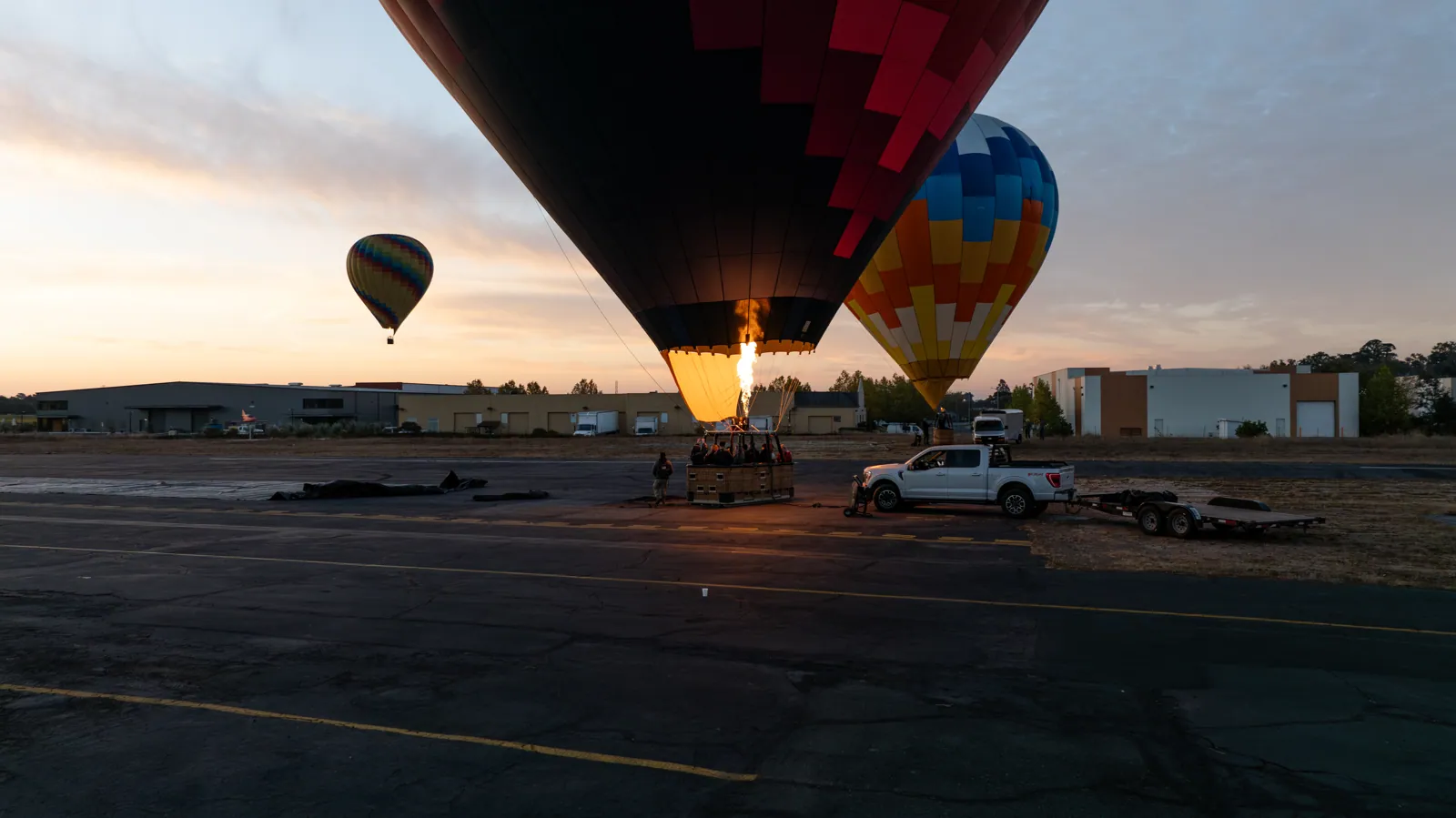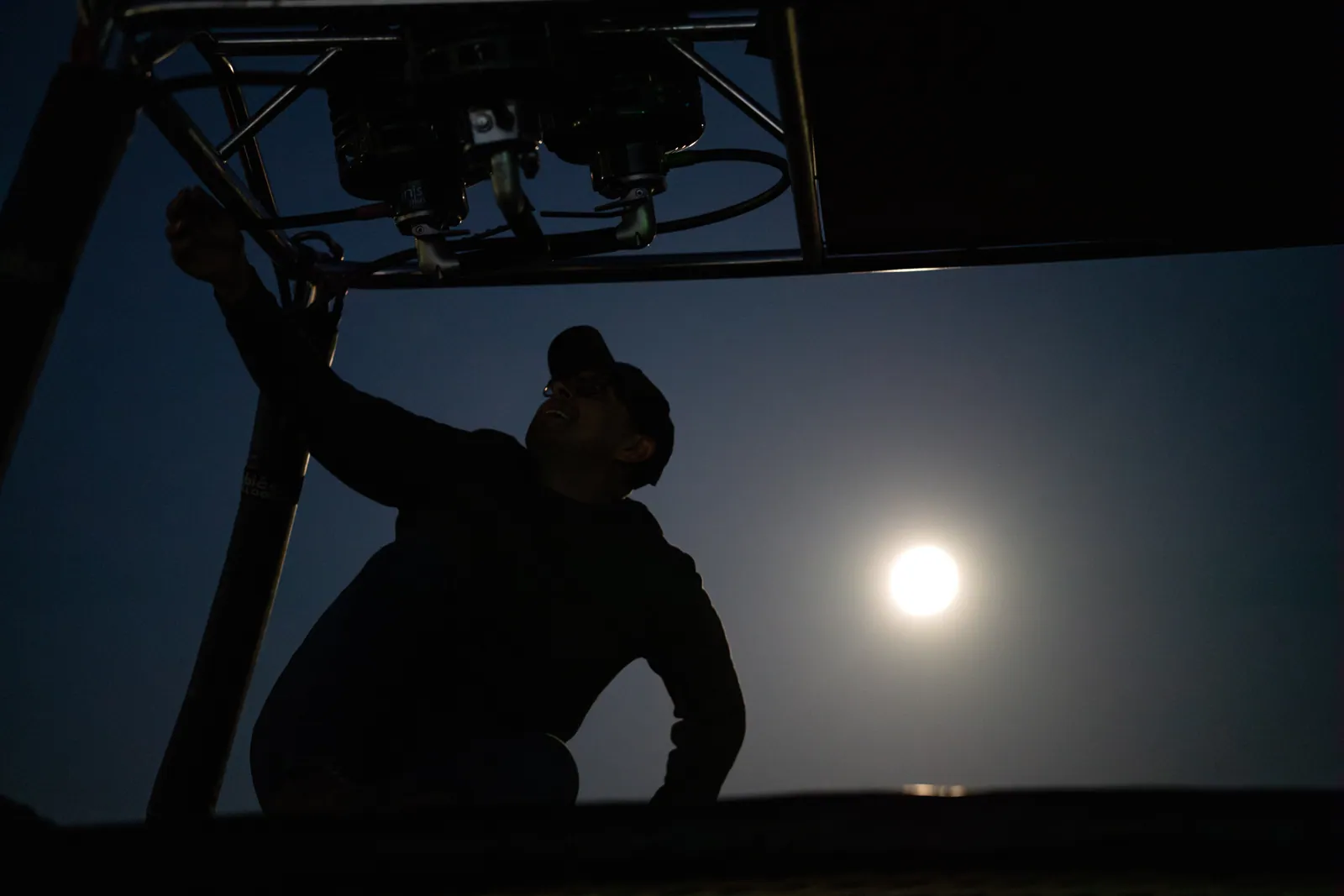
It’s one of the first questions guests ask us at the launch field, usually somewhere between their first cup of coffee and the moment the burner roars to life: how high are we actually going to go?
The short answer is that most sightseeing hot air balloons fly between about 1,000 and 3,000 feet above the ground. But the honest answer — the one we love giving in person — is that altitude in a balloon is a choice we make with the morning, the wind, and the views in mind. Some of the most magical moments of a flight happen just a few hundred feet over the vineyards, close enough to say good morning to the deer.
Here’s everything you actually want to know about how high hot air balloons fly, from a team that does it over Sonoma wine country most mornings of the year.
The short answer: how high hot air balloons usually fly
For a typical scenic flight, you can expect:
- A few hundred feet above the ground for the slow, intimate passes over vineyards, rivers, and rooftops — often the part guests remember most.
- 1,000 to 3,000 feet above the ground for the big, panoramic “top of the world” views.
- Higher when it makes sense — balloons can comfortably climb to 5,000 feet or more to find a better wind direction or a clearer view, though we rarely need to over wine country.
A balloon spends a flight gently moving between these layers. One minute you’re skimming a treetop; a few minutes later you’re high enough to see two valleys and, on the clearest mornings, all the way to the San Francisco Bay.
How high do we fly over Sonoma wine country?
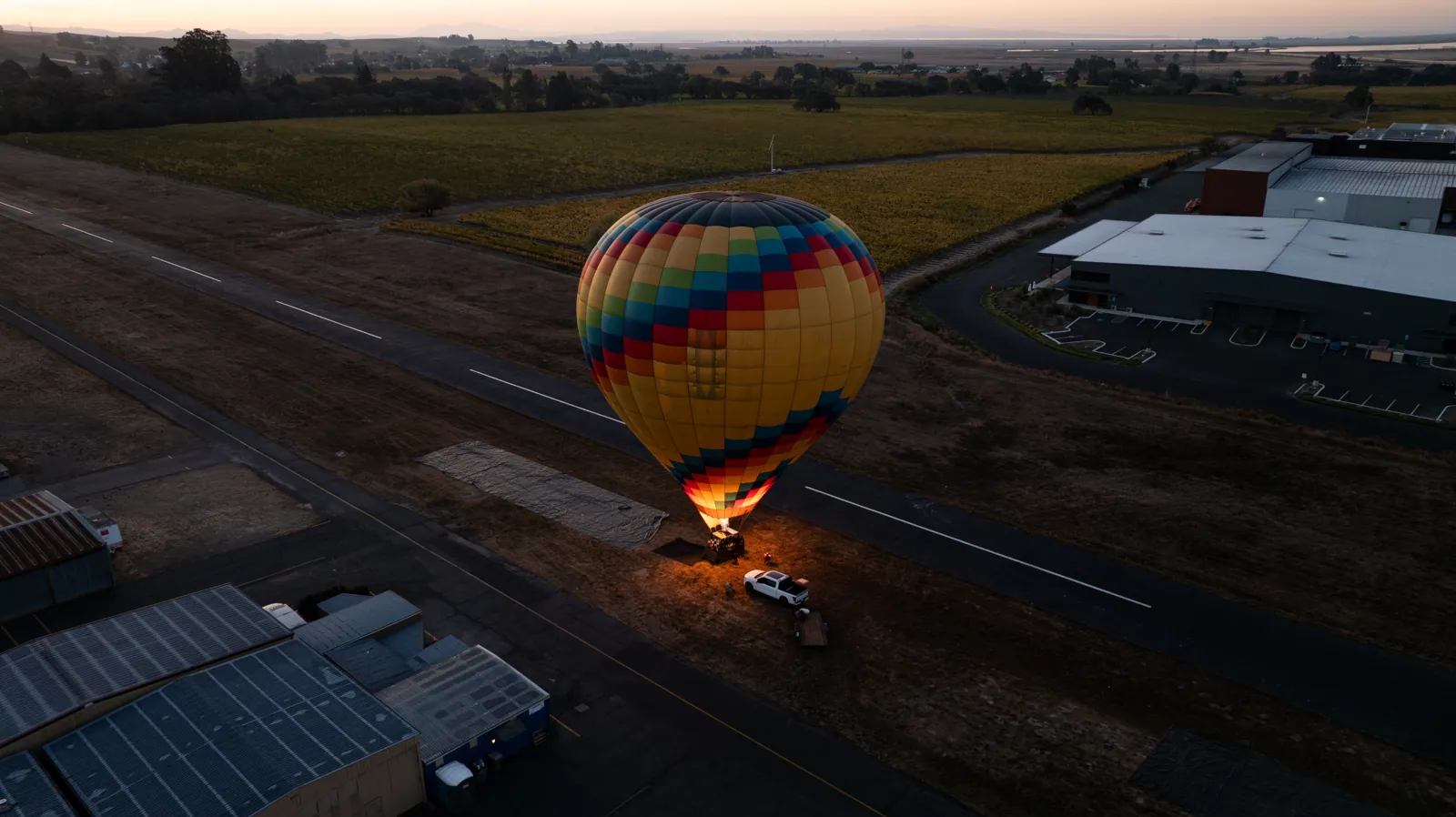
We tailor every flight to the conditions that particular morning, and altitude is a big part of that. Because we launch from our private airport and partner vineyards in the Carneros and Sonoma Valley area, we aren’t locked into one rigid flight path — we go where the winds are best and fly the heights that show off the landscape.
On a given morning that usually means flying low and slow over the vineyards for the detail and the texture, then climbing to roughly 1,000 to 2,500 feet for the sweeping panorama. From up there you can take in the patchwork of Carneros, the Mayacamas ridgelines, and — when the air is clear — glimpses of the Bay and the city skyline. (We wrote a whole piece on that view here: Can You See San Francisco From a Hot Air Balloon in Sonoma?)
If you’re curious where those launches actually happen and why it changes day to day, we break it down in Where We Actually Fly: Carneros, Schellville, and Those Secret Sonoma Launch Windows.
How high can a hot air balloon go? The world record
Now for the fun trivia your group will argue about over the champagne toast.
The official altitude record for a hot air balloon is 68,986 feet — just over 21 kilometers, or roughly 13 miles straight up. It was set by Indian businessman Dr. Vijaypat Singhania on November 26, 2005, in a specially built Cameron Z-1600 balloon over Mumbai, India. He beat the previous record of nearly 65,000 feet set by Per Lindstrand over Texas in 1988.
To put that in perspective, that record flight went more than twice as high as a typical airliner’s cruising window. At those altitudes the air is far too thin and cold to survive without a pressurized suit and oxygen — it has about as much in common with a wine-country sunrise flight as a space launch does with a bicycle ride. We mention it only because it’s a great reminder of just how capable these aircraft are. Your flight with us will be a far cozier (and far warmer) affair.
What decides how high we fly each morning?
Altitude isn’t random, and it isn’t really about thrill-seeking. A few things guide the call:
- Wind layers. A balloon has no steering wheel — pilots change direction by climbing or descending into air that’s moving the way they want. Choosing an altitude is largely about choosing a wind. (We explain this beautifully counterintuitive trick in How Does a Hot Air Balloon Steer?)
- Visibility and the views. Some mornings the magic is in the low passes; others reward a climb for the long view.
- Airspace and clouds. We fly under FAA rules and keep clear of clouds and controlled airspace, which sets a sensible ceiling on any given day.
- Your comfort. If a group is feeling cautious, a gentle, lower flight is often the sweet spot — and just as beautiful.
Does being up high feel scary?
This surprises almost everyone: ballooning doesn’t trigger the stomach-drop feeling you get at the edge of a tall building or on a roller coaster. Because the basket drifts with the wind, there’s no rushing air and no sway. You’re moving with the sky rather than against it, so even guests who tell us they’re afraid of heights routinely forget to be nervous. We hear “I can’t believe how calm this is” on nearly every flight.
If it’s your first time, our first-timer’s guide to what to expect walks through the whole morning, and our safety page explains how our FAA-certified pilots make the call on every flight.
How do pilots actually control altitude?
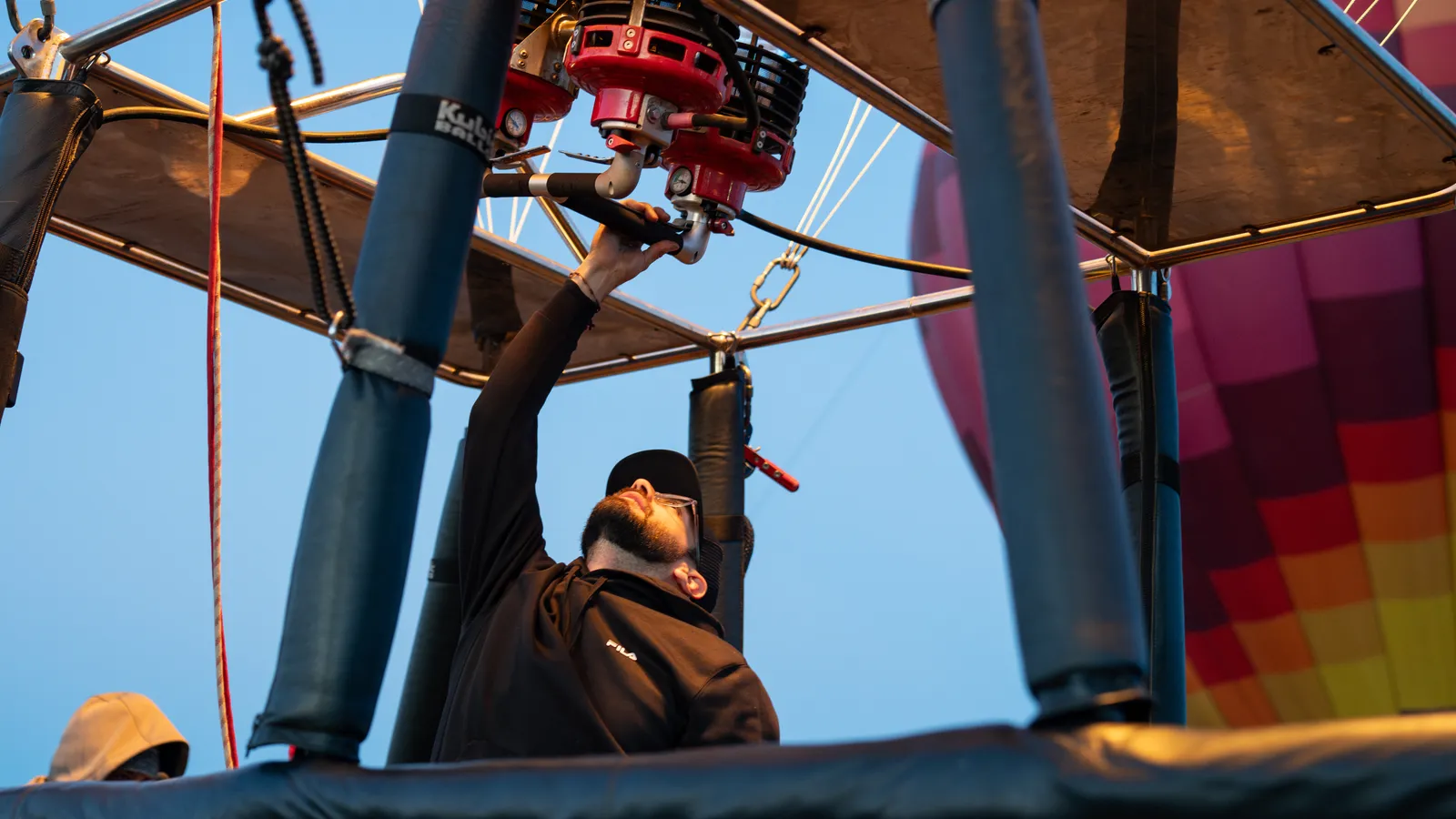
It’s elegantly simple. Firing the burner heats the air inside the envelope, the balloon becomes more buoyant, and you rise. Let the air cool slightly, or open the vent at the top, and you settle back down. A skilled pilot is constantly making tiny adjustments — nudging up a few hundred feet to catch a different breeze, easing down for a closer look at a vineyard — so smoothly that you’ll barely notice the transitions. That gentle, deliberate dance between altitudes is exactly what makes a wine-country balloon flight feel less like a ride and more like floating.
Frequently asked questions
How high do hot air balloons fly on a typical ride?
Most scenic flights stay between a few hundred feet and about 3,000 feet above the ground, moving between lower passes and higher panoramic stretches throughout the flight.
What’s the highest a hot air balloon has ever flown?
68,986 feet (about 21 km), set by Vijaypat Singhania in 2005 — an extreme, record-attempt flight that required a pressure suit and oxygen, nothing like a sightseeing ride.
Can you breathe normally at hot air balloon height?
Yes. At normal sightseeing altitudes the air is exactly like the air on the ground — no oxygen needed. Only extreme high-altitude record attempts require it.
How high will we fly over Sonoma?
It depends on the morning, but typically a mix of low vineyard passes and climbs to around 1,000–2,500 feet for the big views.
Is it cold up there?
Less than you’d think — temperatures change only slightly at our altitudes, and the burner keeps things warm. Mornings are crisp, so we still recommend layers. See what to wear and why calm air makes winter magical.
See it for yourself
The best way to understand how high a hot air balloon flies is to feel it — that first quiet climb above the vineyards is something no number really captures. Come find out where the morning takes us.
Book a join-in flight · Explore our packages · Call us at 707-819-9223
Sonoma Ballooning — taking wine country to new heights. Voted #1 in both Sonoma and Napa.
Ready to see it for yourself?
Sunrise join-in flights over Sonoma & Napa wine country — champagne toast included, from $265.
Book a Flight · $265